Beat grid drift: why your downbeats move when you switch platforms
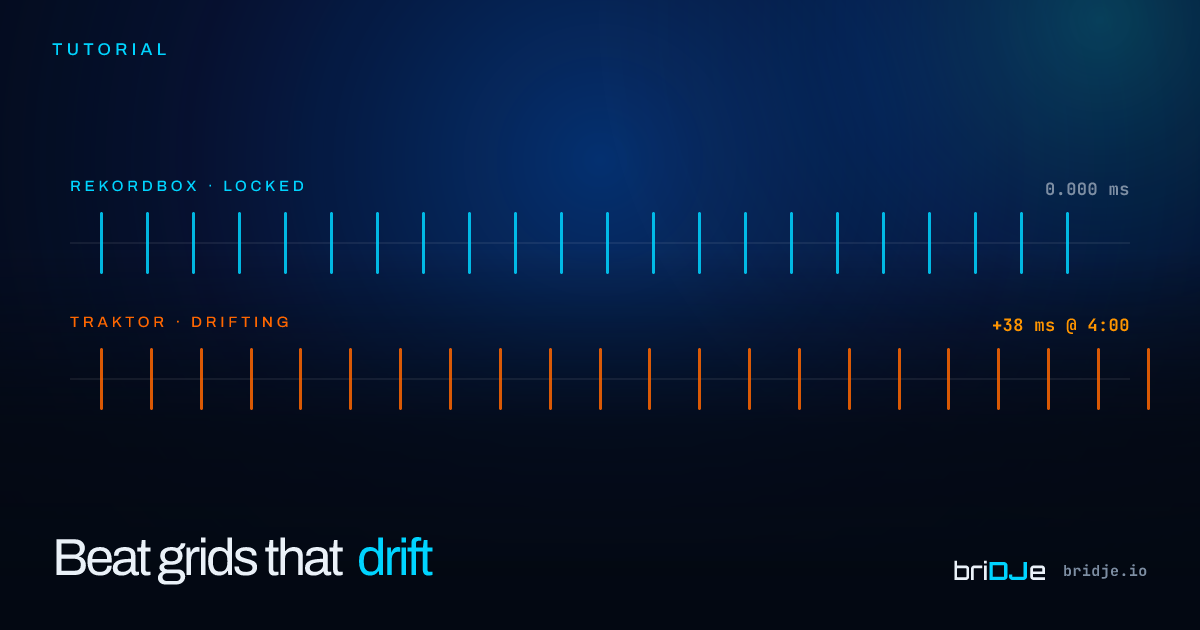
Same track. Same audio file. Different DJ software. So why does Rekordbox think the first downbeat is at 0.043 seconds and Traktor puts it at 0.051 seconds?
This 8ms discrepancy is enough to throw off a tight mix. At 128 BPM, 8ms is about 0.06 beats — enough to feel slightly off in a blend.
Where beat grids live
Every DJ platform stores beat grids differently:
- Rekordbox: stores the anchor point in milliseconds, BPM as a floating point number
- Traktor: stores the anchor in samples at the track’s native sample rate
- Serato: stores the downbeat as a frame count in the ID3 tag
- Engine DJ: uses a proprietary format in its SQLite database
- VirtualDJ: stores beat markers in its XML database file
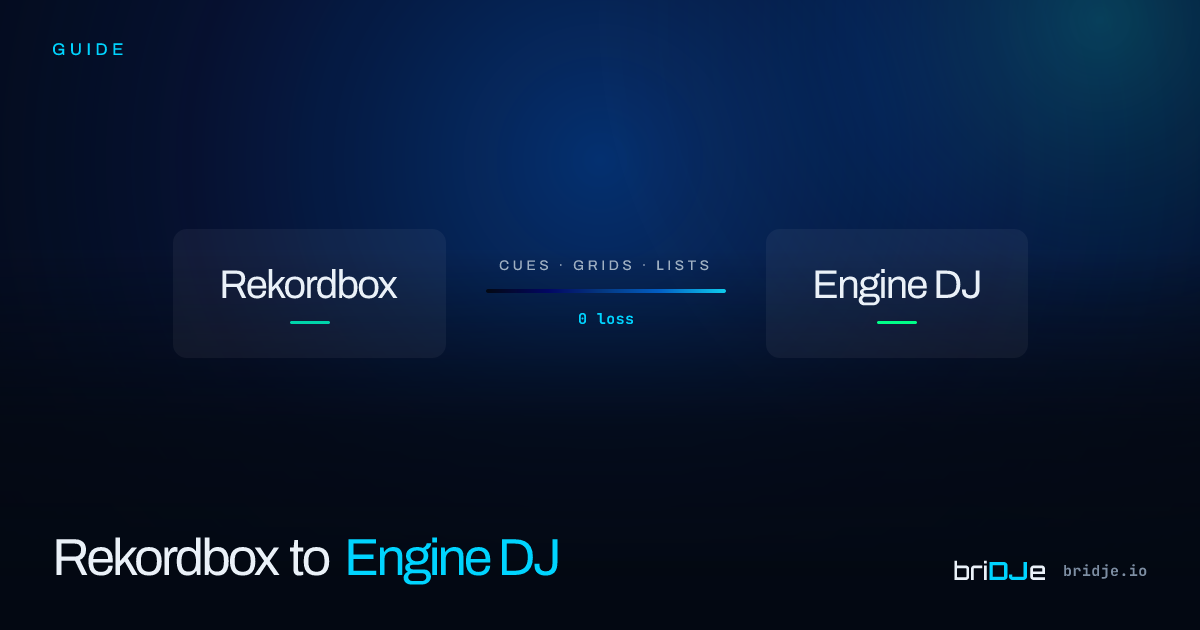
When you transfer a grid from Rekordbox to Traktor, you’re converting from milliseconds to samples. Rounding errors at this conversion introduce drift.
How briDJe minimizes the error
briDJe converts using the track’s actual sample rate — not an assumed 44,100 Hz. Most modern audio is 44,100 Hz, but a surprising number of club tracks are mastered at 48,000 Hz. Using the wrong rate introduces 8.8% error on every conversion.
The result is typically under 0.2ms drift — imperceptible in a mix.